
Gear Review — Youth & Junior Hockey Sticks
Best Youth Hockey Sticks of 2026
Standing in the rink lobby with a six-year-old who just outgrew his stick, staring at a wall of $50 to $300 twigs, is one of those classic hockey-parent moments. Pick wrong and you either spend a fortune on a stick he snaps in three weeks, or you cheap out and hand him a 50-flex two-by-four he cannot bend. After working through the 2026 youth and junior lineup at Pure Hockey, my pick for most kids is the Bauer Vapor Hyperlite 2 Junior — a real elite stick scaled correctly for a kid's body and shooting strength.
We earn a small commission when you buy through our links. This never affects our rankings — picks are based on direct playing experience, verified buyer reviews, spec research, and conversations with other hockey parents and coaches.
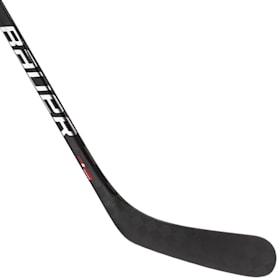
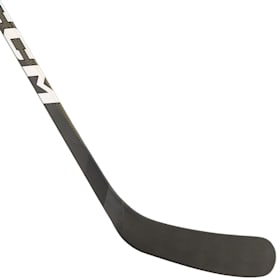
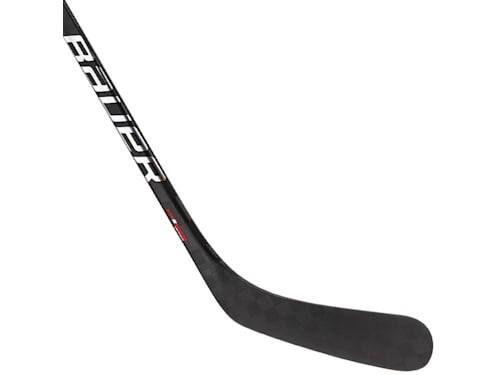
Bauer Vapor Hyperlite 2 Junior Stick
The Vapor Hyperlite 2 Junior is the stick I personally would buy for my own kid — and the one I tell my buddies to buy for theirs. Bauer took the same elite-level senior stick that Cale Makar shoots from and engineered the kid version with proper youth specs: lower flex options (30, 40, 50), shorter shaft, and a junior blade that lets a 60-pound kid actually load up the stick. Most "junior" sticks from other brands are just senior shells cut down. This one is genuinely built for a child's body.
The low-kick point matters more for kids than it does for adults. A young player does not have the strength or technique to load a full-windup slap shot — their game is wrist shots and snap shots in tight, and the Vapor Hyperlite 2's quick release lets them get the puck off before the goalie reads them. Watch a U10 game and the kid scoring goals is almost always the kid with the quickest release. This stick gives that to your kid.
The smart way to buy this is to match the flex/length to your kid's current size. The 30 flex comes in a 50″ shaft for the smaller, lighter kids around 60-70 lbs. The 40 flex jumps to 52″ for the 70-90 lb range. The 50 flex is 54″ for kids 90+ lbs ready for intermediate next year. Get this right and the stick lasts a full season — get it wrong and you are back at the rink lobby in February.
Specifications
- Flex / Length
- 30 flex / 50″, 40 flex / 52″, 50 flex / 54″
- Weight
- ~360g junior — lightest in the junior category
- Kick Point
- Low-kick — quickest release for snap shots and wristers
- Construction
- Advanced Carbon Layering 2.0 — same flagship tech as the senior
- Best For
- Ages 8–12, travel/AAA hockey, second-year competitive and up
- Patterns
- P28, P88, P92 — full junior pattern lineup
Pros
- Genuinely engineered for kidsNot a senior stick cut down — the flex curve, weight balance, and blade are all sized to a child's body and shooting strength.
- Quick release teaches good shooting habitsThe low-kick point rewards proper technique — your kid learns to load the stick instead of muscling shots, which carries over for years.
- Three flex/length combos for proper sizing30/50″, 40/52″, 50/54″ covers the full junior range — no need to cut the shaft and stiffen the flex by mistake.
- Kids can actually feel the differenceMove a kid up from a budget twig to this stick and they will tell you. Their face will tell you. The shot will tell you.
Cons
- Premium price for a stick they will outgrow$130-$180 hurts if your kid grows two inches mid-season — not the right pick if your child has not committed to competitive hockey yet.
- Lightweight blades crack faster on slap shotsA kid winding up clappers on cement before practice can chip the blade — tape it up properly and remind them this is not a backyard stick.
Bottom Line
The Bauer Vapor Hyperlite 2 Junior is the best youth stick on the market for a kid in competitive hockey. The standout feature is that it is genuinely built for a child — not a senior stick scaled down, but engineered from scratch for a 60-100 lb body. This is for the travel-team kid, the AAA player, and the second-year mite who has clearly fallen in love with the game. If your kid is going to live at the rink for the next decade, this is the stick that helps them go bar down.
Get the Bauer Vapor Hyperlite 2 Junior
Buy at Pure Hockey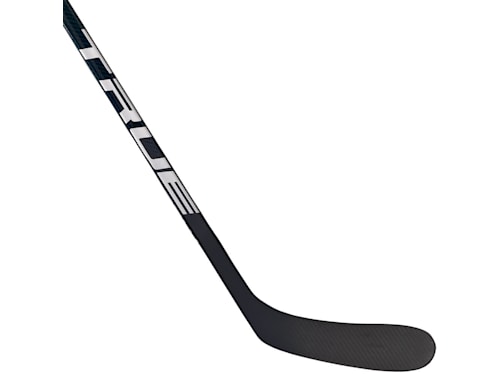
TRUE AX5 Junior Stick
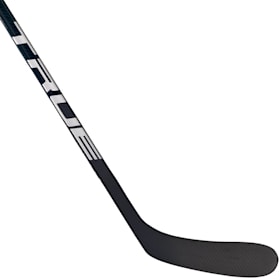
The TRUE AX5 is the stick I would put in the hands of every first-year competitive kid — and at $60 on sale (regular $100), it is the smartest dollar in the youth hockey aisle. TRUE has quietly become the best value brand for kids' sticks because they engineer their junior lineup as proper junior sticks rather than as marketing afterthoughts. The AX5 is genuinely a composite stick with a real carbon fiber shaft and a real responsive blade — not a fiberglass painted up to look fancy.
The mid-kick point is actually the right choice for the youngest players. Forwards in the 7-10 age range are still developing technique, and a stick that loads more across the full shaft (rather than just at the bottom) lets them feel where the energy goes when they shoot. They learn proper mechanics. The AX5 sits at 434 grams which is heavier than the Hyperlite, but for a kid who is still figuring out how to shoot, the slight extra weight gives them feedback they can feel. Lighter is not always better at this age.
I tell parents this all the time: do not buy your six-year-old a $200 stick. Buy them this stick. They will outgrow it in 10 months. They will use it as a tape-tester for their friend's stick. They will leave it on a snowbank at the rink. Save the $200 stick for when they are 11 and have proven they actually love the game.
Specifications
- Flex / Length
- 40 flex / 51″, 50 flex / 52″
- Weight
- ~434g junior — mid-weight, gives kids shooting feedback
- Kick Point
- Mid-kick — teaches proper full-shaft loading
- Construction
- Carbon fiber composite shaft, foam-core blade
- Best For
- Ages 7–10, first-year mite/squirt, growing-fast kids
- Patterns
- TC2 (mid curve), TC4 (toe curve)
Pros
- Real composite stick at $60Not a glorified two-by-four — a genuine carbon fiber shaft and a responsive blade at a price that does not punish you when your kid grows.
- Mid-kick teaches good mechanicsFor 7-10 year olds still learning to shoot, the mid-kick load helps them feel proper shooting form — better foundation for later.
- Buy two for the price of one HyperliteThe math is brutal in your favor — this is how you survive a season when your kid breaks a stick by January.
- Holds up to backyard playA budget stick can take the abuse of street hockey and outdoor rink shifts — you would never let your kid use a $180 Hyperlite on cement.
Cons
- Heavier than premium options434g vs the Hyperlite's 360g — once your kid hits a competitive level, the weight difference becomes a real handicap.
- Blade pop fades after a couple monthsThe foam-core blade does not hold its responsiveness like premium blades — expect dead spots by mid-season if your kid practices daily.
Bottom Line
The TRUE AX5 Junior is the smartest dollar for first-year and recreational youth hockey. The standout is the value — a real composite stick at a sale price that should not be possible. This is for the parent of a 7-10 year old in their first or second year, the family with two kids in hockey, and anyone watching their kid grow two inches every six months. If you are not ready to commit $180 yet, this is the pick that lets your kid play real hockey on a real stick without breaking the bank.
Get the TRUE AX5 Junior
Buy at Pure Hockey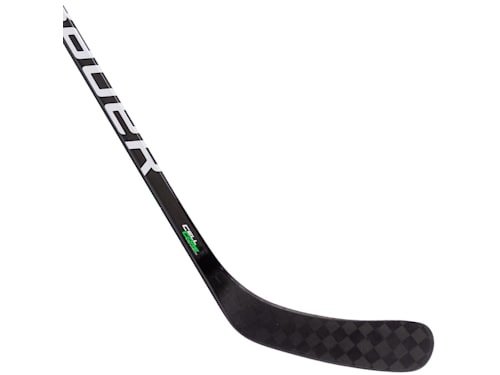
Bauer Nexus Performance Youth Stick
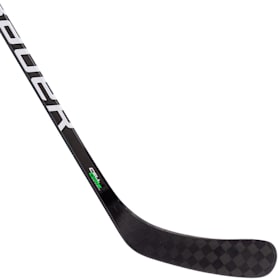
If your kid is between four and seven, the Bauer Nexus Performance Youth is the stick I would put in their hands. This is the smallest size category — the actual "youth" classification — and it is built for kids who are still learning to skate, learning to handle the puck, and just starting to figure out what shooting feels like. The Nexus Performance is 330 grams, 30 flex, and the shaft is sized to a small kid's grip, which matters more than parents realize. A child trying to wrap his hand around a senior-shaft circumference will never develop proper stickhandling.
The 30 flex is the key spec. A typical 5-year-old weighs 40-50 lbs, which means anything stiffer than 30 flex is functionally unbendable for them — they end up swinging at the puck instead of shooting it. The Nexus Performance Youth lets a 50-pound kid actually load the stick and feel a real release. That feedback is what builds confidence, and confidence is what keeps kids coming back to the rink.
Bauer's Nexus line is the all-around family in their lineup — not specialized for slap shots or quick releases, just a balanced stick that does everything reasonably well. For a kid who has not yet developed a shooting preference, that is exactly the right design. As your kid gets older and shows you what kind of player they are going to be (sniper, playmaker, two-way), you can specialize. At this age, just give them a stick they can shoot.
Specifications
- Flex / Length
- 30 flex / ~46″ (also available in 40 flex / ~49″)
- Weight
- ~330g — among the lightest youth sticks available
- Kick Point
- Mid-kick — balanced load for kids learning to shoot
- Construction
- Carbon fiber composite shaft, dampening core blade
- Best For
- Ages 4–7, weighing 35–65 lbs, height 38–49″
- Patterns
- P92 (mid curve, easy to lift the puck)
Pros
- 30 flex is genuinely bendable for a small kidA 50-pound child can actually load this stick — you will see it bend when they shoot, which means they are learning real shooting mechanics.
- Smaller shaft circumference for small handsNot a junior shaft cut down — the grip is sized for a child's hands, which builds proper stickhandling habits early.
- Bauer brand parents trust at $60You get a real Bauer stick at the price of a knockoff — great for first-year players and anyone watching the budget.
Cons
- Single pattern option (P92)No P28 or P88 in youth sizing — the P92 is the most beginner-friendly curve, but if your kid already has a preference, this is not the place to find it.
- Will be outgrown in a yearYouth sticks have a short lifespan by definition — expect to upgrade to a junior stick around age 7-8 even if this one still looks fine.
Bottom Line
The Bauer Nexus Performance Youth is the right first stick for a real beginner. The standout feature is the 30 flex paired with a small-grip shaft — a kid this size can actually shoot with this stick, which most "youth" sticks fail at. This is for the four-to-seven-year-old in their first year of mites, the kid graduating from learn-to-skate, and any small player who needs gear sized properly to their body. Get this stick now and worry about specialized brands later.
Get the Bauer Nexus Performance Youth
Buy at Pure Hockey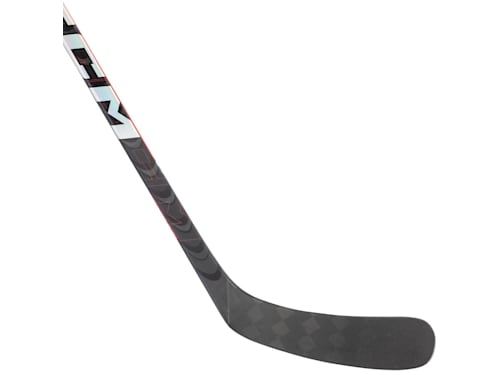
CCM JetSpeed FT5 Pro Junior Stick
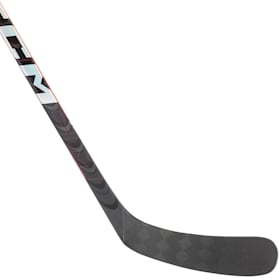
The JetSpeed FT5 Pro Junior is the stick I would put on a kid playing AAA, travel, or any kid who has clearly outgrown the recreational level. CCM took the JetSpeed FT5 Pro — a stick that was a flagship two seasons ago in senior sizing — and built the junior version with the same Nanolite Carbon Layering and the same RR-90 dampening-core blade, just sized for a 70-100 lb body.
The hybrid kick point is the right call for a developing competitive player. A pure low-kick stick like the Vapor Hyperlite 2 rewards quick wristers and snap shots — great for forwards. A pure mid-kick like the Tacks line rewards full-windup slap shots — great for shooters from the point. The JetSpeed FT5 Pro Junior sits in between, which is exactly what a 10-year-old needs while they are still figuring out what kind of player they are going to be. Versatility while their game develops.
The big advantage at this price point is the dampening-core blade. Most $130-$140 junior sticks use a basic foam blade that goes dead in two months. The RR-90 is the same blade tech CCM put on $300 senior sticks two years ago, and the puck feel is genuinely there — your kid can stickhandle, deke, and saucer-pass with a stick that responds to them. For competitive youth hockey, this matters as much as any shooting spec.
Specifications
- Flex / Length
- 40 flex / 51″, 50 flex / 54″
- Weight
- ~370g junior — among the lightest at this price
- Kick Point
- Hybrid — balances quick release and shot power
- Construction
- Nanolite Carbon Layering with R-Geometry blade and RR-90 core
- Best For
- Ages 9–12, AAA/travel hockey, ambitious second-year competitive
- Patterns
- P28, P88, P90T
Pros
- Hybrid kick fits every kind of shotA 10-year-old does not know if they are going to be a sniper or a defenseman yet — this stick is good at both, which is what you want during development.
- RR-90 blade has real puck feelA dampening-core blade at $140 is rare — your kid gets actual stickhandling response, not a dead foam blade that flattens by Christmas.
- Construction holds up for a full seasonPremium carbon layering means this stick survives the abuse a competitive 10-year-old hands out — expect a real season of life.
- Pattern lineup includes P28If your kid wants to be Connor Bedard, the P28 lets them work on the toe-curve game — that pattern is rare in junior sizing.
Cons
- Inventory is shrinkingCCM is rolling out the FT8 Pro — FT5 Pro junior in the exact flex/pattern you want may not be in stock for long.
- Hybrid kick is not specializedIf your kid is already a pure shooter or pure puck-mover, the Hyperlite 2 (low-kick) or Tacks AS-V Pro (mid-kick) will fit them better.
Bottom Line
The CCM JetSpeed FT5 Pro Junior is the smartest spec for a developing competitive kid. The standout feature is the hybrid kick paired with the RR-90 blade — flexibility across shot types and puck feel that punches above the price tag. This is for the AAA/travel kid, the second-year squirt or peewee, and any junior player whose game is still evolving. If your kid plays competitive hockey and you want one stick that does everything, this is the pick.
Get the CCM JetSpeed FT5 Pro Junior
Buy at Pure Hockey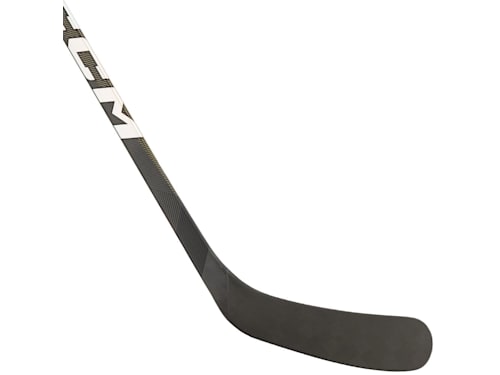
CCM Tacks AS-V Pro Junior Stick
The CCM Tacks AS-V Pro Junior is the stick I would buy if I had a 10-year-old who already had a shot. The Tacks line is CCM's heavy-shooter family — same family Roman Josi has shot with for years — and the junior version is engineered around a true mid-kick load that lets a kid feel a real slap shot or one-timer. If your kid takes shots from the perimeter and likes to wind up, this is the spec.
What makes the AS-V Pro the best mid-range pick is the V-shaped shaft. CCM gave the Tacks line a slightly squared geometry through the shaft, which gives a kid's bottom hand a real grip surface during stickhandling. A round shaft (like most kid sticks) rotates in their grip when they make a hard turn or fight a defender for the puck. The V-geometry stops that rotation. Small kid, big benefit.
At its sale price of $150 (down from $250), this is genuinely premium-grade construction at mid-range money. The Acufeel blade has full pop, the Sigma carbon shaft has the same DNA as the senior flagship, and the weight is right around 380 grams — respectable for a junior stick at this price. Buy this if your kid is ready for a real heavy-shooter setup but you are not ready to pay $180 for a Hyperlite.
Specifications
- Flex / Length
- 40 flex / 51″, 50 flex / 54″
- Weight
- ~380g junior
- Kick Point
- Mid-kick — rewards full-windup slap shots and one-timers
- Construction
- Sigma carbon shaft with V-geometry, Acufeel blade
- Best For
- Ages 8–12, kids who already shoot with technique, growing shooters
- Patterns
- P28, P88, P90T
Pros
- True mid-kick at junior sizeLoads the full shaft when your kid winds up — the right spec if they have a slap shot they actually use.
- V-geometry shaft fills small handsSquared shape gives a real grip surface in puck battles — no rotation when your kid leans into a shot or muscles a puck.
- $100 off regular priceCCM rotates the AS-V Pro Junior into sale frequently — at $150 it is genuinely a $250 stick on discount.
- Premium-grade durabilitySigma carbon shaft and a real Acufeel blade hold up — this stick lasts a competitive season for a kid who plays hard.
Cons
- Mid-kick is not for tight-area snipersIf your kid plays a quick-release game in tight, the low-kick Hyperlite 2 will fit their style better than this mid-kick load.
- V-shape feels weird at firstKids used to round shafts will need a couple of practices to adjust — some kids never love it.
Bottom Line
The CCM Tacks AS-V Pro Junior is the best mid-range value for a developing shooter. The standout feature is the V-geometry shaft — a real grip surface in your kid's bottom hand and a true mid-kick load for slap shots. This is for the 8-12 year old who has already developed shooting technique, the heavy-shooting young defenseman, and any junior player whose game involves the slap shot. If your kid is ready for a real heavy-shooter twig and you want premium tech at mid-range money, this is the smart pick.
Get the CCM Tacks AS-V Pro Junior
Buy at Pure HockeyFinal Word
We have talked about some of the best youth and junior hockey sticks on the market today — from the elite Bauer Vapor Hyperlite 2 Junior to the budget-friendly TRUE AX5 — and really it's all about finding the right fit for your kid's age, weight, and skill level.
I have tested all of these sticks alongside hockey-parent friends and none of them will let your kid down if you size them properly. My personal favorite for a competitive young player is the Bauer Vapor Hyperlite 2 Junior. It is genuinely engineered for a child's body, the low-kick teaches good habits, and the three flex/length combos cover almost every junior age. For a first-year or recreational player, save the money and go with the TRUE AX5 — no contest at the value level. And if your kid is between four and seven, the Bauer Nexus Performance Youth is the easy answer.
If anyone has an opinion or question on any of the sticks I have talked about, we'd love to hear from you. Drop us a line, find us on social, or come argue blade patterns at the rink. Until then — lace 'em up, get them on the ice, and let your kid go bar down.


